


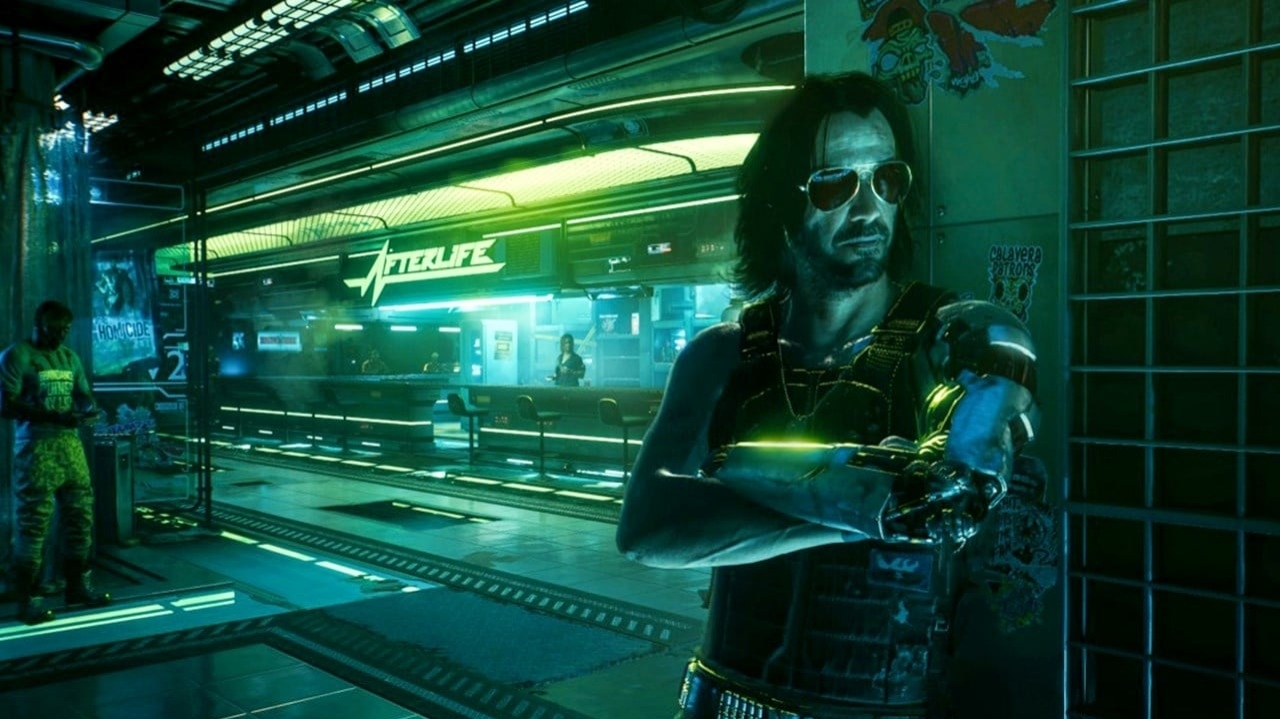
CD Projekt promises to avoid mistakes in the development of sequels.
The team ultimately decided on using a tool called Confluence to try and centralize a kind of "living documentation," but it backfired. The project expanded uncontrollably and surpassed the unbelievable mark of 8,000 pages of files, leading to organizational priorities falling off the leadership's radar. To add to an already problematic scenario, documents related to the Cyberpunk 2077: Phantom Liberty expansion were clumsily divided between internal servers and cloud storage. “It was chaos,” admitted Adrian Fulneczek, noting that this mess not only hindered the internal workflow of the developer itself but also complicated the work of external companies involved in production.
All this hassle exposed a longstanding issue. During a panel at the Digital Dragons event, technical writers Jarosław Ruciński and Adrian Fulneczek explained to GamesRadar+ that CD Projekt Red historically did a poor job of documenting the backstage of their projects. In the era when they were working on early games like The Witcher and The Witcher 2: Assassins of Kings, virtually nobody took the time to save technical knowledge for the future. The studio now admits there's hardly anything left from that period, a regrettable negligence that took its toll when the current team decided to start the remake of the first The Witcher and realized they needed to recreate almost everything from scratch due to a sheer lack of preserved files.
The current promise is that the anticipated The Witcher 4 and Cyberpunk 2 will avoid the same development nightmare that resulted in the disastrous and broken release of Cyberpunk 2077. According to in-house professionals, the major turning point for the upcoming blockbusters involves a bureaucratic area largely ignored by the public: the internal documentation of each mechanic. The current plan entails making sure programming knowledge flows freely between teams scattered around the globe.
Previously, a lot of valuable information remained locked within specific rooms and departments. With the new system, sharing has become mandatory. Jarosław Ruciński detailed that if the team working on the new witcher saga game discovers a smart solution to make a system work, the team focused on the futuristic sci-fi universe can take that same line of code and adapt it to their game. This reuse of ideas aims to avoid the constant rework that tends to drain production time in large studios, offering hope that the next releases might hit the market in a more acceptable state.
To instill order, updating documentation has become a mandatory step for any project to get the green light to move through the pre-production, alpha, and beta phases. Adrian Fulneczek revealed that the management at CD Projekt even created a new internal criterion for what they consider a completed project, determining that technical documentation is now a vital part of delivery. Although following rigid, structured processes might seem like corporate drudgery to developers, it’s the price the company must pay to clean its tarnished reputation and ensure the consumer doesn't end up with another unfinished product on the shelves.

Comments
Log in to your account or create one for free on MG Community to participate in comments.